I didn’t think I had a drinking problem. That’s what made this experiment so uncomfortable.
Six months ago, I downloaded an app called Soberya — not because I wanted to quit drinking, but because I’m the kind of person who tracks everything. Steps, sleep, macros, screen time. Why not alcohol?
I had no rules for myself. No limits, no “dry days” mandate. Just one instruction: log every single drink, honestly, for six months. What I found made me rethink everything I thought I knew about my relationship with alcohol.
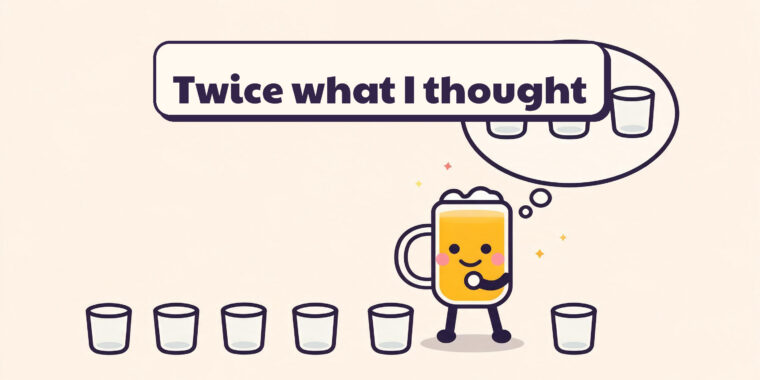
The First Shock: I Was Drinking Twice What I Estimated
If you’d asked me in January how much I drank, I’d have said “a few drinks on weekends, maybe one or two during the week.” That sounded reasonable. That sounded like a normal person.
The data told a different story.
Week one: 14 drinks. Week two: 16. Week three: 11 (I was “being good”). By month three, the weekly average hovered around 15–18 drinks — roughly 2–3 per day when you do the math. My mental estimate was off by roughly 100%.
Here’s the thing about self-reporting without data: your brain rounds down. The Wednesday happy hour that turned into four beers? You remember it as “a couple drinks after work.” The bottle of wine you and your partner split on a Tuesday? That’s “just wine with dinner.” When you log it, the math doesn’t lie. Two glasses of wine on Tuesday, three beers on Wednesday, a “quiet” Thursday with one cocktail, and suddenly you’re at six drinks before the weekend even starts.
Soberya made this impossible to ignore. Every entry stared back at me from the dashboard. The weekly totals. The monthly trends. The little bar charts climbing higher than I wanted to admit. There’s something uniquely humbling about watching your “moderate drinking” turn into a data set that looks anything but moderate.

Most of My Drinking Wasn’t Enjoyable — It Was Habitual
This was the second revelation, and it stung more than the first.
When I reviewed six months of logs, I started categorizing each entry: genuinely enjoyable vs. habit/autopilot.
The results were brutal. Maybe 30% of my drinks fell into the “enjoyable” category — a great cocktail at a nice bar, wine with a friend I hadn’t seen in years, a cold beer after a genuinely hard day of physical work. The other 70%? Habit.
The glass of wine while cooking dinner. The beer because it’s 6 PM and that’s what I do. The second and third drinks at a party where one would have been plenty. The “nightcap” that wasn’t about enjoyment — it was about signaling the end of the day.
Tracking made me notice the autopilot in real time. I’d reach for a drink and think, “Do I actually want this, or am I just doing what I always do?” More often than not, I didn’t actually want it. I just hadn’t built a different habit yet.
The People and Places That Triggered Me
Here’s where the data got uncomfortable in a different way.
Certain friends. Certain bars. Certain situations. My drinking didn’t just spike — it doubled. I could predict it: dinner with Mark meant at least four drinks. Game night at Jake’s meant the beer never stopped flowing. Work conferences were a three-day binge disguised as networking.
The sobering part wasn’t just the volume. It was realizing that some of these people I genuinely liked, and some of these activities I genuinely enjoyed — but the drinking had become the centerpiece, not the side dish. Without four drinks, would I still enjoy game night? I wasn’t sure. And that uncertainty was the problem.
The app’s logging showed me patterns I couldn’t unsee. Tuesday nights: 1–2 drinks. Friday with certain friends: 5–7 drinks. Sunday alone: 0 drinks. The data drew a map of my triggers, and some of those triggers were people I loved.
The Money — Oh, the Money
I’m not going to pretend I didn’t know alcohol was expensive. But knowing something abstractly and seeing a six-month total are very different experiences.
$2,847. That’s what I spent on alcohol in six months. Bars, restaurants, bottle shops, the “good” wine for dinner parties, the rounds I bought because it was my turn. Almost three thousand dollars. For a substance that, if we’re being honest, I only truly enjoyed about 30% of the time.
That’s a vacation. That’s a new laptop. That’s six months of a gym membership and personal training sessions. That’s money I could have spent on literally anything else and felt better about.
Soberya doesn’t have a built-in cost tracker (though it should), but I added my own estimates, and the number made me physically wince.

The Data Changed My Behavior Without Any Rules
Here’s the most surprising outcome: I never set a single rule for myself. No “only on weekends.” No “max two per day.” No “dry January.”
But the act of tracking changed my behavior anyway.
When you know you’re going to log a drink, you think twice before pouring it. Not because anyone is watching — the app doesn’t judge you — but because you’re watching yourself. The data becomes a mirror. And I didn’t always like what I saw.
By month four, my weekly average had dropped from 16 to 9 drinks. By month six, it was down to 6–7. Not because I made a rule. Because I didn’t want to log another mindless Tuesday beer. Because I wanted the weekend numbers to look better. Because the streak of “light days” felt good in a way I hadn’t anticipated.
This is the counterintuitive truth: awareness alone is a powerful intervention. You don’t need willpower. You don’t need abstinence. You just need to stop lying to yourself — and tracking makes lying impossible.
What I’m Doing Now
I still drink. But not the way I used to.
These days, I average 4–6 drinks per week, almost exclusively on Fridays and Saturdays. When I pour a drink, it’s because I want it, not because it’s 6 PM and my brain is on autopilot. I’ve found replacement rituals — sparkling water with lime in a nice glass scratches the “something in my hand” itch surprisingly well. I’ve learned which friends I can see without drinking and which ones I need to suggest a coffee instead of a bar.
And I still track everything. Not because I’m obsessed with the numbers, but because the simple act of logging keeps me honest. It’s the cheapest accountability partner I’ve ever had.
If you’ve ever wondered whether you drink “a normal amount,” here’s my advice: don’t wonder. Track it for 30 days. Just 30 days. Log every drink in Soberya and see what the data says. You might be surprised. I certainly was.