You’ve been watching it for a while now. The third round when everyone else stopped at two. The jokes about “needing a drink” that stopped being jokes. The way they show up to brunch already smelling like last night.
And now you’re stuck: you care about this person, you’re genuinely worried, and you have absolutely no idea how to bring it up without making them feel attacked or defensive. Every script you rehearse sounds like either an accusation or a bad intervention scene from a movie.
Here’s the good news: there’s a way to have this conversation that actually works. And it has almost nothing to do with telling someone they have a problem.
Why “You Drink Too Much” Never Works
“You drink too much.” “I’m worried about your drinking.” “Do you think you might have a problem?”
These statements share a fatal flaw: they position you as the judge and your friend as the defendant. You’ve created a courtroom dynamic — and courtrooms produce defense strategies, not honest conversations.
When someone hears “you drink too much,” their brain processes threat, not concern. The immediate internal response is: You don’t know what I’m dealing with. You drink too. Who are you to judge? I don’t have a problem. The shame response kicks in before logic has a chance. And shamed people don’t open up — they shut down, deflect, or counter-attack. You’ve just made the drinking harder to talk about, not easier.

The Better Approach: Questions Over Declarations
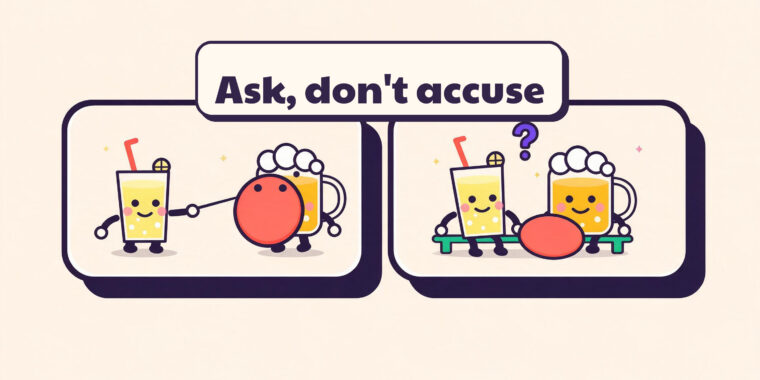
If statements shut people down, questions open them up. Not interrogations — genuine, curious questions that invite reflection.
Here’s what that sounds like:
- “How have you been sleeping lately? You’ve seemed tired.”
- “I’ve noticed you seem really stressed. What’s going on?”
- “Are you okay? I’ve been a little worried — not in a dramatic way, just checking in.”
Notice what’s missing: any mention of alcohol. These questions focus on wellbeing, not behavior. They communicate I see you without communicating I’m watching you.
The magic here is that many people who drink too much already know it. They’re not oblivious — they’re stuck. “How are you sleeping?” might prompt them to connect dots you never had to point out: Actually, I’ve been sleeping terribly. Maybe it’s the wine before bed. You’re not delivering a diagnosis. You’re holding up a mirror.
Share Your Own Experience First
One of the most disarming things you can do is make yourself vulnerable first.
“I’ve been thinking about my own drinking lately. I realized I was pouring a glass of wine every night without even thinking about it, and it started to feel less like a choice and more like a habit. I don’t love that.”
This normalizes the conversation, removes the “you’re the problem” framing, and invites your friend to share without pressure. If they respond with “oh my god, same” — you’re in. If they don’t engage, you haven’t burned any bridges.
Focus on Behavior, Not Identity
There’s a crucial distinction: talk about what they do, not what they are.
“Your drinking worries me” targets identity. “I noticed you’ve been missing our morning hikes” targets behavior — something getting in the way of something you both value.
People can change behavior without reconstructing their entire sense of self. Some observations that work:
- “You’ve seemed really wiped out at work lately.”
- “I miss the version of you that stayed for the whole dinner conversation.”
- “You used to be the one organizing weekend plans, and I’ve noticed that’s shifted.”
Alcohol might not even be mentioned. But the dots are there, and your friend can choose to connect them.
When to Say Something — and When to Stay Quiet
Timing is everything.
Don’t bring it up when they’re actively drinking, in a group setting, or when you’re angry. Nothing productive happens when someone is holding a glass.
Do bring it up when you’re both sober and rested, after a specific incident but not in the heat of it, and when you can lead with warmth, not worry. “I care about you” lands differently than “I’m concerned about you.”
And sometimes the most powerful thing you can do is simply show up — be the friend who suggests coffee instead of cocktails, who organizes a hike instead of happy hour, who makes sobriety feel like connection rather than deprivation.

Suggesting Tracking as a Neutral Starting Point
If the conversation goes well and your friend seems open but unsure what to do, suggesting a tracking app can be the gentlest possible next step. It’s not a commitment to quit. It’s not a diagnosis. It’s just data.
Soberya becomes the perfect conversation starter here. Instead of “you should stop drinking,” try: “I started using this app that tracks drinks, calories, and money saved — it’s kind of eye-opening. Want to try it together?”
Tracking removes the moral weight from drinking. It’s not good or bad — it’s just numbers. And numbers are hard to argue with. When someone sees they’re consuming 35 units a week while the guideline is 14, the data speaks for itself. Soberya’s streak tracker adds another layer: every dry day becomes a win, turning reduction into something genuinely motivating.
What If It Doesn’t Go Well?
Sometimes it won’t. Your friend might get defensive or change the subject. That doesn’t mean you did the wrong thing — it means they’re not ready. The seed is planted. People rarely change the moment someone points something out. They change weeks later, when they’re alone with their thoughts and your words echo back.
Your job isn’t to force a breakthrough. It’s to leave the door open: “I’m not trying to push anything. I just wanted you to know I’m here.” Then follow through. Keep inviting them to non-drinking activities. Keep being their friend. That consistency — not one conversation — is what eventually makes the difference.