You think you’re subtle. You wait until the kids are in bed. You pour your glass of wine or your whiskey after homework is done and teeth are brushed. You’re not getting drunk in front of them. You’re a responsible parent.
Here’s the uncomfortable truth: they notice. They’ve always noticed.
And what they’re learning from you has nothing to do with what you say about alcohol — and everything to do with what you do.
The Research That Should Make Every Parent Pause
A longitudinal study published in the Journal of Adolescent Health tracked over 2,000 families for a decade. The finding? Children who saw their parents drink regularly — even “responsibly” — were significantly more likely to drink heavily as teenagers and young adults.
Not children of alcoholics. Children of normal, moderate drinkers.
The mechanism isn’t complicated. Kids learn by modeling. If every celebration involves champagne, every stressful day ends with wine, and every social gathering centers on beer, they absorb a simple message: this is how adults cope, connect, and celebrate. By the time they’re 16, the pattern is already wired.
Another study from the University of Michigan found that children as young as 4 could identify alcoholic beverages and associate them with adult social situations. By age 8, most kids have a rough mental map of “when adults drink” — Friday nights, parties, after a bad day at work.
They’re not judging you. They’re just taking notes.

The Normalization Effect
This is the part nobody wants to talk about.
There’s a concept in behavioral psychology called descriptive norms — what we perceive as “normal” based on what we see people around us doing. Parents are the most powerful source of descriptive norms for children.
When you pour a drink every evening at 6 PM, you’re not just unwinding. You’re teaching a lesson: this is what evenings look like. When you joke about “needing a drink” after a hard day, you’re teaching: alcohol is the solution to stress. When you open a bottle to celebrate, you’re teaching: joy requires alcohol to be complete.
None of this is intentional. That’s what makes it so powerful.
The kids who see this daily — who watch their parents reach for a drink as reliably as they reach for their phones — internalize it. By adolescence, drinking doesn’t feel like a choice. It feels like growing up.
What Kids Actually Observe
A fascinating study asked children to draw pictures of their parents’ drinking habits. The results were eye-opening. Kids as young as 6 drew detailed scenes: the specific glass, the bottle in its usual spot, the time of day, the change in their parent’s voice or mood afterward.
What else do they notice?
- Quantity. Kids might not count units, but they notice when the bottle goes from half-full to nearly empty in one evening.
- Mood shifts. The slightly louder laugh. The shorter temper. The way you sit heavier in your chair. They catalogue all of it.
- Rituals. The Friday beer, the Sunday roast wine, the vacation cocktail. These become anchors of family life — and later, their own.
- The morning after. Less energy. More irritability. The subtle difference between “parent on a dry morning” and “parent who had three glasses last night.”
You can’t hide it. You’re not as slick as you think you are. And honestly? That’s okay — as long as you’re aware of what you’re modeling.
Sober Curious Parenting: A Better Model
Here’s the good news: the same research that shows kids absorb negative drinking norms also shows they absorb positive ones.
“Sober curious parenting” isn’t about being teetotal. It’s about being intentional. It means:
- Naming what you’re doing. “I’m having a glass of wine because I enjoy the taste with dinner — not because I had a bad day.” Kids understand distinctions when you articulate them.
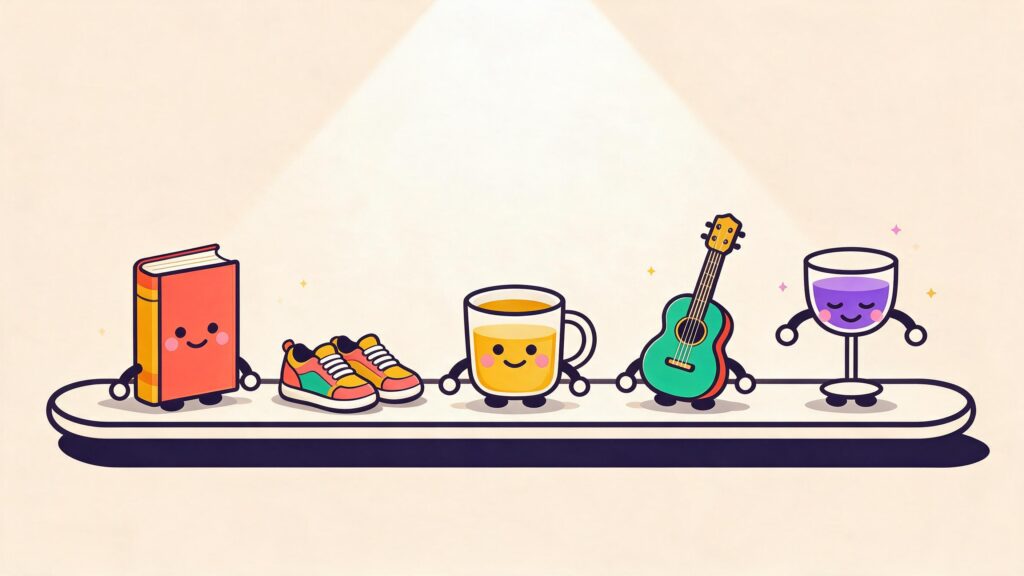
- Showing alternatives. Let them see you decompress with a walk, a book, music, exercise. Alcohol shouldn’t be the only tool in your stress-management kit — and they should see that.
- Having alcohol-free celebrations. Some of the best family memories happen over sparkling water and cake. If every big moment involves alcohol, what lesson does that send?
- Talking about it openly. When age-appropriate, discuss why some adults choose not to drink, why moderation matters, and what responsible drinking actually looks like.
The goal isn’t to hide your drinking. It’s to make sure alcohol doesn’t look like the protagonist of your life story.
Why Tracking Sets a Good Example
Kids learn more from what you measure than from what you preach. When you track your spending, they learn financial literacy. When you track your fitness, they learn health matters. When you track your drinking? They learn that alcohol is something to be mindful about — not something that happens on autopilot.
Soberya isn’t just a personal tool — it can be a family health tool. When you log your drinks, set weekly limits, and watch your patterns, you’re building awareness. And awareness is the opposite of the mindless drinking that normalizes excess for the next generation.
You don’t have to announce it at the dinner table. You don’t have to lecture. Just model it. Let them see you making intentional choices. That alone is more powerful than any “drugs and alcohol” talk they’ll ever sit through at school.