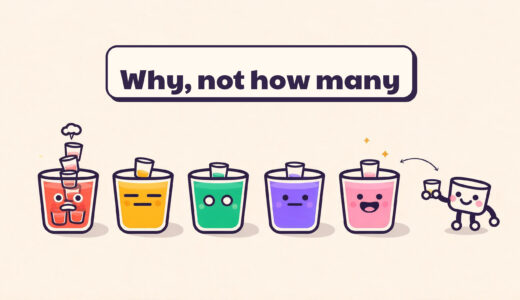
“Drink less” is the most common piece of alcohol advice on the planet. It’s also the most boring. And, frankly, it misses the point.
Most people who track their drinking don’t actually want to stop drinking entirely. They want to stop the drinking that doesn’t serve them. The Tuesday beers they don’t remember. The third glass of wine that turns a nice evening into a groggy morning. The rounds they order because everyone else is, not because they want another.
The goal isn’t to drink less. The goal is to drink better. And data — real, personal data about your own habits — is how you get there.
Reframing the Goal: Quality Over Quantity
The standard advice assumes all drinks are equal. They’re not. A glass of champagne at your best friend’s wedding and a lukewarm beer alone on a Tuesday are both “one drink” in a tracking app. But one of those is a memory. The other is a habit you probably don’t even enjoy.
The quantified-self approach to alcohol — using your own data to understand your own patterns — doesn’t ask you to eliminate drinking. It asks you to eliminate the drinking that isn’t worth it.
Think of it like a financial audit. You’re not trying to spend zero money. You’re trying to stop the subscriptions you forgot about, the impulse purchases you regret, and the spending that doesn’t align with what you actually value. Same logic, different currency.
Which Drinks Are Worth It?
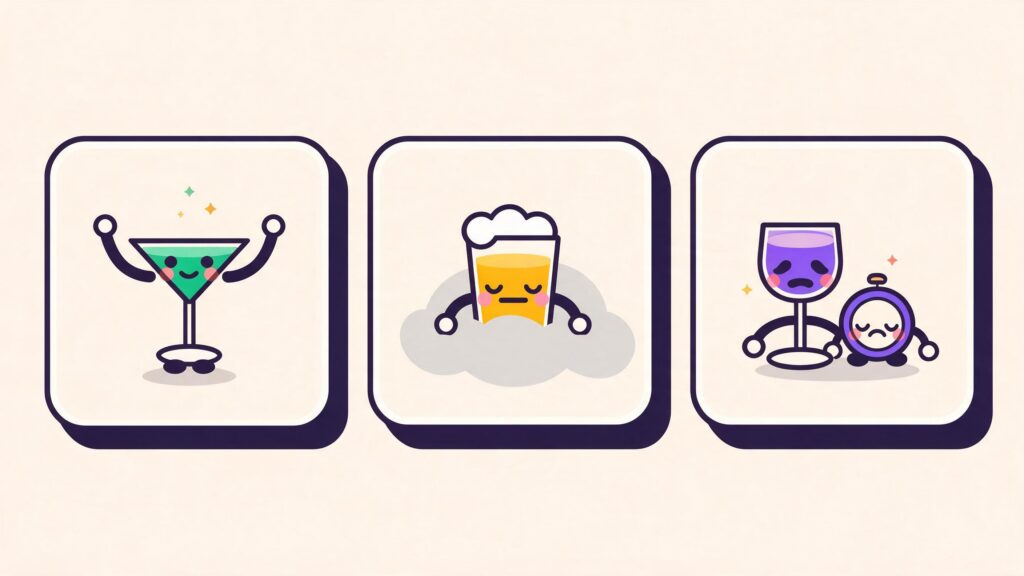
Here’s a framework: every drink you have falls into one of three categories.
Category 1: The Highlight Reel. These are the drinks you’d keep even if you had unlimited willpower. The toast at a wedding. The negroni on a rooftop in a new city. The beer after finishing a marathon. These drinks create memories. They’re not the problem.
Category 2: The Autopilot. These are the drinks you have out of habit, not desire. The glass of wine because it’s 7pm. The beer because the game is on. The cocktail because that’s what you always order. These drinks don’t create memories — they create a fog. They’re the low-hanging fruit.
Category 3: The Regrets. These are the drinks that actively make your life worse. The third drink that becomes a fourth. The “one more” that ruins tomorrow. The stress-pour that doesn’t actually relieve stress. These are the ones to eliminate entirely.
The problem is that in the moment, Categories 2 and 3 feel like Category 1. Your brain at 7pm on a Tuesday doesn’t distinguish between “I genuinely want this” and “this is just what I do.” That’s where data comes in.
What Your Data Reveals
After a month of tracking with Soberya, patterns emerge that you’d never notice day-to-day:
Time patterns. Maybe you discover that you never regret drinks before 8pm, but everything after 10pm is Category 3 territory. That’s actionable: a 10pm cutoff rule.
Day patterns. Maybe Tuesday and Thursday are your high-consumption days because those are your stressful meeting days. Maybe Saturday is fine because it’s social, but Sunday drinking is always solo and always regrettable. Now you know where to focus.
Mood patterns. This is the big one. When you tag your drinks with mood — and Soberya lets you do this — you might discover that 80% of your regrettable drinking happens when you rate your mood below 4/10. That’s not a drinking problem. That’s a stress management problem that happens to express itself through drinking.
Drink type patterns. Hard liquor leads to more drinks per session than beer or wine? Cocktails at bars lead to more than drinks at home? These insights let you make smarter choices without feeling deprived.
Optimizing for Enjoyment
Here’s the counterintuitive part: tracking your drinking often leads to enjoying it more.
When you cut the Category 2 and 3 drinks, the Category 1 drinks become more special. The glass of wine on Saturday tastes better when it’s not preceded by four glasses of wine across Tuesday, Wednesday, and Thursday. Your tolerance drops. Your appreciation rises. Quality replaces quantity not because you’re forcing it, but because it naturally follows.
This is what “drinking better” actually means. It’s not about white-knuckling through deprivation. It’s about curating your drinking the way you’d curate a playlist — keeping the hits, cutting the filler.
For the financial angle on this, check out how much cutting back on alcohol saves you. The math is more compelling than you’d think.
Building Your Personal Drinking Dashboard
You don’t need a data science degree. You need three things:
- A tracking habit. Log every drink. Takes 5 seconds. Soberya makes this frictionless — quick-add buttons, drink presets, and the ability to log with a single tap.
- A review ritual. Once a week, spend 5 minutes looking at your data. Not to judge yourself — to understand yourself. What patterns do you see? What surprised you? What’s one thing you want to do differently next week?
- A feedback loop. Set a target (e.g., “max 10 units per week,” “at least 3 alcohol-free days”). Track against it. Adjust based on what you learn. This isn’t a set-it-and-forget-it goal — it’s an ongoing experiment where you’re both the scientist and the subject.
The people who succeed with this approach aren’t the ones with the most willpower. They’re the ones who treat their drinking as a system to be optimized, not a moral failing to be overcome.

The Quantified-Self Approach to Alcohol
The quantified-self movement — using technology to track and analyze personal data — has transformed fitness, sleep, nutrition, and productivity. But somehow, alcohol has been left out of the conversation. We track our steps obsessively but have no idea how many units we drank last week.
That’s strange, because alcohol has a bigger impact on your sleep, mood, energy, skin, and long-term health than almost anything else you could track. A bad night of drinking affects you more than a bad night of sleep. A heavy drinking week affects your gym performance more than skipping leg day. Yet most people have more data about their heart rate than their alcohol consumption.
Soberya is built to close that gap. It’s a personal analytics dashboard for your drinking — showing you trends, patterns, streaks, and insights that turn vague intentions (“I should probably drink less”) into concrete actions (“I’m going to stop drinking alone on Sundays because that’s when 40% of my weekly units come from”).
The Bottom Line
Drinking less is a side effect. Drinking better is the goal.
When you use data to understand your own patterns, you stop fighting yourself and start working with yourself. You discover which drinks are worth it and which aren’t. You learn what triggers your regrettable drinking. And you build a relationship with alcohol that’s based on awareness, not restriction.
Soberya gives you the data. What you do with it is up to you.