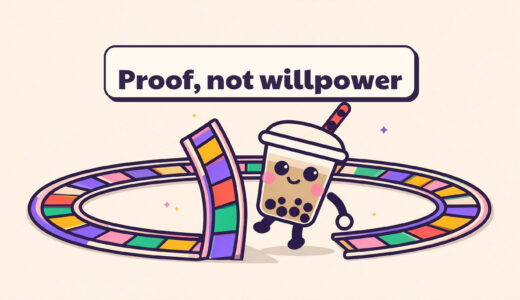
You start the day with clarity. You tell yourself: “Tonight, one drink. Maybe two. Definitely not three.”
And then 9pm rolls around and you’re halfway through your third glass, wondering where your resolve went. The most frustrating part? You meant it when you said it. At 8am, you genuinely believed you’d stick to the limit. You weren’t lying to yourself. You just underestimated your enemy.
That enemy isn’t weak character. It’s not even alcohol. It’s your own brain running on empty.
What Is Decision Fatigue?
Decision fatigue is the deterioration of your ability to make good choices after a long session of decision-making. And here’s the thing most people don’t realize: you make decisions all day. Hundreds of them. Most are trivial — what to eat for breakfast, which email to answer first, whether to take the stairs or the elevator. But each one consumes a tiny amount of mental energy from the same shared reservoir.
By the time evening hits, your decision-making circuits are fried. Your prefrontal cortex — the part of your brain responsible for impulse control, planning, and saying “no” to things you want but shouldn’t have — has been running a marathon since you woke up.
The famous “judges study” demonstrated this dramatically. Researchers analyzed over 1,100 parole decisions made by Israeli judges and found something disturbing: prisoners who appeared early in the morning were granted parole about 65% of the time. Those who appeared late in the day? Nearly 0%. The judges weren’t crueler in the afternoon. Their brains were just exhausted. Saying “no” is cognitively cheaper than evaluating a complex case, so their fatigued brains defaulted to the easier option.
Now apply that logic to your evening drink. Your brain has been making decisions for 12+ hours. It’s depleted. And “pour a drink” is an incredibly easy decision compared to “go for a run” or “cook a healthy meal” or “sit with your own thoughts.”

The Willpower Illusion
We talk about willpower like it’s a character trait. It’s not. It’s a resource. And like any resource, it depletes with use.
This is why your 8am self and your 8pm self are functionally different people when it comes to self-control. Morning You has a full tank of decision-making fuel. Morning You has been to the gym (or at least thought about it), eaten a healthy breakfast, and committed to “just one drink tonight.” Morning You is basically a superhero.
Evening You has been in meetings, handled passive-aggressive emails, decided what to eat three times, navigated traffic, and processed approximately 10,000 micro-decisions. Evening You’s prefrontal cortex is running on fumes. Evening You looks at the wine bottle and thinks, “You know what? I deserve this. It’s been a day.”
Evening You isn’t weak. Evening You is tired. And tired brains make tired choices.
Why Tracking Changes the Equation
Here’s where it gets interesting. Decision fatigue thrives on autopilot. The reason you pour that third drink isn’t because you actively decide to. It’s because you’ve stopped deciding at all. The glass empties, and your hand reaches for the bottle before your brain even registers what’s happening.
Tracking breaks the autopilot.
Soberya works because it inserts a decision point where there wasn’t one before. When you have to log each drink, you’re forced to acknowledge it. You’re forced to decide — consciously — whether you actually want another one. And conscious decisions, even from a tired brain, are better than no decisions at all.
The app doesn’t judge you. It doesn’t shame you. It just asks: “Are you sure about this one?” And sometimes — not always, but sometimes — that pause is all your prefrontal cortex needs to catch up and say, “Actually, I’m good.”
Pre-Commitment: The Morning Person’s Secret Weapon
If your evening self can’t be trusted to make good decisions, the solution isn’t to berate your evening self. It’s to take the decision away from your evening self entirely.
This is called pre-commitment, and it’s one of the most effective behavioral change strategies in psychology. You make the decision before you’re tired, when your willpower tank is full, and you lock it in.
Practical pre-commitment strategies:
Set a hard limit in the morning. Not “I’ll try to drink less.” That’s a wish, not a plan. “Two drinks maximum tonight.” Specific. Non-negotiable. Write it down. Tell someone. Use Soberya to set a daily goal so it exists outside your head.
Remove the default. If the wine is on the counter, drinking is the path of least resistance. If it’s in a cabinet in the garage, not drinking is the path of least resistance. Decision fatigue makes you lazy — use that laziness in your favor by making the healthy choice the easy one.
Schedule an alternative. The biggest lie we tell ourselves: “I’ll figure out what to do tonight when tonight comes.” No you won’t. At 7pm, you’ll default to whatever’s easiest. Decide at 3pm what you’re doing at 7pm. Put it in your calendar. Treat it like a meeting.

The Evening Routine That Actually Works
Most “evening routine” advice reads like it was written by someone who has never been tired. Meditation journals and gratitude practices are lovely, but they’re not competing with a cold beer after a long day.
What competes:
Friction-based architecture. Put obstacles between you and alcohol. Not dramatic obstacles — just enough to make your brain register the choice. Keep drinks in a different room. Don’t buy the second bottle. If you’re at a bar, close your tab after two drinks and switch to soda water.
Ritual replacement. The evening drink isn’t just about alcohol. It’s the ritual — the transition from “work mode” to “relax mode.” Replace the substance but keep the ritual. Pour sparkling water into a nice glass with ice and lime. Make an elaborate tea. The physical act of preparing something for yourself matters more than what’s in the glass.
The 10-minute rule. When the craving hits, tell yourself you can have the drink in 10 minutes. Set a timer. Do something — anything — for those 10 minutes. Fold laundry. Reply to a text. Step outside. Most cravings don’t last longer than 10 minutes, and you’ll often forget you even wanted the drink.
Soberya helps here by showing you the pattern over time. When you can see that Tuesdays are always your heaviest drinking day — probably because Tuesday has no social plans and no workout class — you can pre-commit to an alternative specifically on Tuesdays. Generic solutions don’t work. Specific ones do.
The Bottom Line
You’re not weak. You’re not undisciplined. You’re just asking your 8pm brain to do a job it’s not equipped to do. Stop trusting your tired self to make good decisions. Make the decisions earlier, lock them in, and use tracking to keep yourself honest.
The morning version of you is smarter than the evening version. Let Morning You call the shots.