You know the feeling. You wake up after a night out, and it’s not just the headache or the nausea. It’s the dread. The replaying of conversations. The sudden certainty that you said something embarrassing. The scrolling through your phone to check what you texted. The overwhelming urge to hide under the duvet for 72 hours.
The Germans have a word for this: Kater (hangover) + Angst (anxiety). We’ve mashed them together into “hangxiety.” And it’s not just a bad mood — it’s a measurable neurochemical event.
The Brain Chemistry Behind Hangxiety
When you drink, alcohol floods your brain with GABA — the neurotransmitter that slows everything down, reduces anxiety, and makes you feel relaxed. It’s why that first drink feels so good. Your racing thoughts quiet down. Your shoulders drop. You become the fun, relaxed version of yourself.
But your brain is a homeostasis machine. It doesn’t like being chemically manipulated. So it compensates: it reduces its own GABA production and blocks GABA receptors. Simultaneously, it ramps up glutamate — the excitatory neurotransmitter that makes you alert, sharp, and also… anxious.
When the alcohol wears off, you’re left with: low GABA (no calm), high glutamate (maximum alert), and a brain that’s been chemically unbalanced. The result is what researchers call “alcohol-induced anxiety disorder” — and it can last 24–48 hours after drinking.
Why It Gets Worse as You Age
Remember when you were 22 and could drink until 3am, sleep for four hours, and show up to a 9am lecture? That version of you is gone. Sorry.
As you age, your body metabolizes alcohol more slowly. Your GABA system becomes more sensitive to disruption. And — this is the kicker — if you’ve been a regular drinker for years, your baseline anxiety level without alcohol is already elevated because your brain has adapted to the constant GABA boost from drinking.
This is why some people who drank “normally” in their 20s find themselves increasingly anxious in their 30s and 40s — and why the hangxiety gets worse even when the hangovers don’t.
The Vicious Cycle
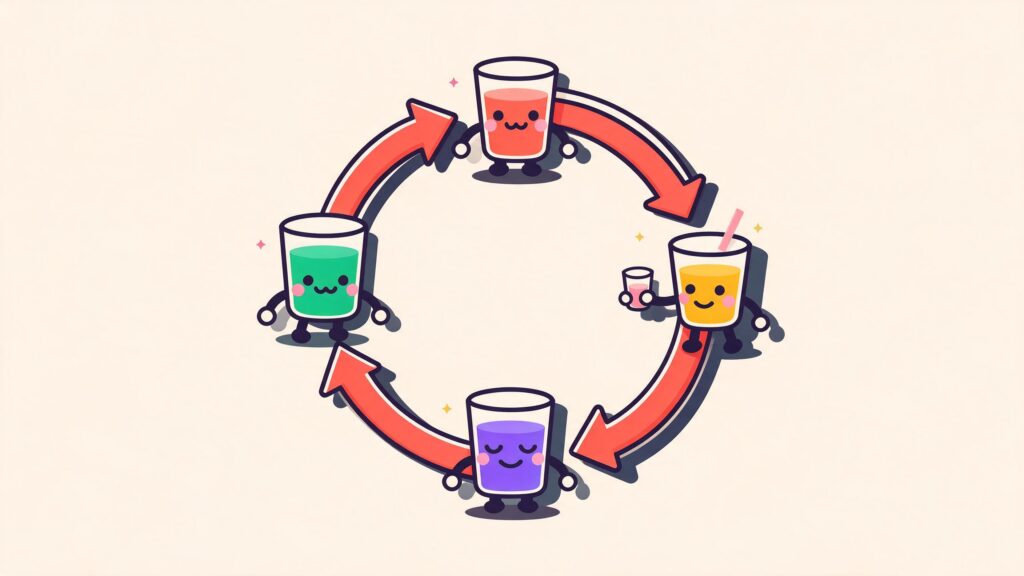
Here’s where it gets cruel:
- You feel anxious (from work, life, whatever)
- You drink to relax
- Alcohol temporarily reduces anxiety (GABA boost)
- Alcohol wears off, anxiety rebounds worse than before (GABA crash + glutamate spike)
- You feel even more anxious
- You drink again to relieve it
- Repeat until your baseline anxiety is permanently elevated
This is how “I have a glass of wine to unwind” turns into “I need a glass of wine to function.” The very thing you’re using to manage anxiety is making it worse in the long run.
How Long Until Your Brain Rebalances?
If you stop drinking:
- Days 1–7: Anxiety peaks. This is withdrawal — your GABA system is underactive and your glutamate system is overactive. It feels terrible. It’s temporary.
- Days 7–14: Anxiety begins subsiding. Your brain starts producing its own GABA again. Sleep improves (see how alcohol affects sleep), which further reduces anxiety.
- Days 14–30: Most people report significantly lower baseline anxiety. The brain has largely rebalanced.
- Months 2–3: Full neurochemical recovery. Many people discover they were never actually “an anxious person” — they were just a person whose brain chemistry was disrupted by regular drinking.

Practical Ways to Manage Hangxiety
Short-term (you’re already hungover):
- Hydrate aggressively. Electrolytes, not just water.
- Eat something — low blood sugar amplifies anxiety.
- Don’t “hair of the dog” it. Adding more alcohol delays the inevitable and strengthens the cycle.
- Move your body. A walk, a light jog. Movement metabolizes cortisol.
- Remind yourself: this is chemistry, not character. You’re not a bad person. Your GABA is just temporarily offline.
Long-term (prevention):
- Track your drinking and correlate it with your anxiety levels. Soberya lets you log mood notes alongside drinks. After a month, the pattern will be undeniable.
- If you’re going to drink, stop earlier. The 3-hour rule: finish your last drink at least 3 hours before bed.
- Experiment with a dry month. We documented the full timeline here: 30 Days Alcohol-Free.
The Bottom Line
Alcohol is not a relaxation tool. It’s a relaxation loan — and the interest rate is brutal. You borrow calm for a few hours and pay it back with 24–48 hours of elevated anxiety.
If you’ve been treating your anxiety with alcohol, you’re not broken. You’re just using a tool that’s designed to fail. Switch to tools that actually work — sleep, exercise, therapy, and tracking your consumption so you can see the connection in your own data.
Soberya helps you see that connection. Because once you see it, you can’t unsee it.